
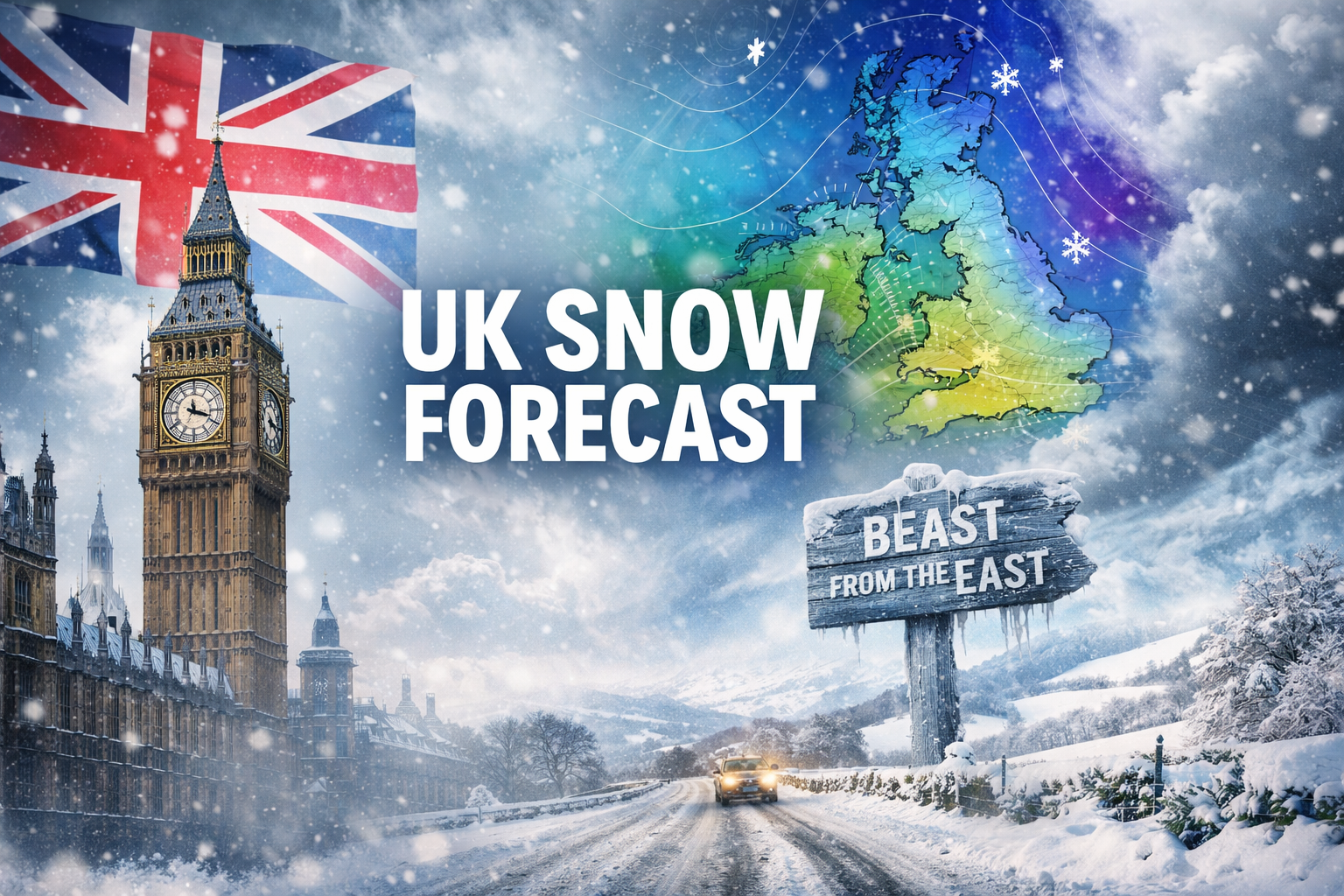
Every winter in the UK, people get obsessed with snow forecasts. As soon as the temperature drops or the news starts talking about cold snaps, everyone’s checking their phones, wondering if they’ll wake up to a white garden. But the UK isn’t like places where snow is guaranteed every year. Here, it’s hit or miss—sometimes you get a few flakes, sometimes nothing. It all depends on what’s happening out over the Atlantic, what air’s blowing in from the Arctic, and how the pressure is moving across Europe.
After years of working with weather stories, I keep noticing the same thing: a lot of confusion between dramatic headlines promising “snow chaos” and what the science actually says. So, let’s break it down—how snow forecasts really work in the UK, what the latest models are showing, and what those big terms like “Beast from the East” actually mean.
How Do UK Snow Forecasts Work?
Forecasting snow here isn’t easy. The UK sits right between the Atlantic and continental Europe, which means we’re constantly caught between mild, wet air from the ocean and blasts of cold from the north or east.
Meteorologists watch a few key things:
- Where the air’s coming from (Arctic, Polar Maritime, Polar Continental)
- How cold it is a bit higher up in the atmosphere (especially at 850 hPa)
- Surface temperatures
- How much moisture is around
- Where low-pressure systems are heading
- Wind direction and strength
But here’s the thing: just because it’s cold doesn’t mean it’ll snow. You need cold air and moisture to line up at the same time. That moisture usually rides in on Atlantic weather fronts or gets whipped up from the North Sea. If they don’t meet, you just get a cold, dry day.
That’s why forecasts can change fast, and why the Met Office always reminds people not to trust any snow predictions more than a week out.
What’s the “Beast from the East” Anyway?
You’ve probably heard this phrase thrown around every winter. It’s not just a tabloid scare tactic—it’s the name for when freezing air pushes in from Siberia or Eastern Europe and sweeps across the UK.
When it happens, you’ll notice:
- Winds coming from the east or northeast
- Temperatures dropping below zero and staying there
- Snow showers, especially in the east
- Big disruptions—if there’s enough moisture around
We don’t get these events often, but when we do, they hit hard. 2018 was the last time most of us really noticed it: days of cold, heavy snow, and roads pretty much at a standstill.
Still, not every chilly spell is a Beast from the East, no matter what the headlines say.
So, What Are the Latest Snow Forecasts Saying?
Right now, the outlook isn’t pointing to a huge, weeks-long freeze. More like some short, sharp cold snaps. Here’s what the models are showing:
- Temperatures dipping below normal at times
- More frost overnight
- Snow most likely on hills, and up north or east
Southern England might get some flakes, but only if everything lines up perfectly (which, honestly, it rarely does)
If you’ve lived through a few UK winters, this probably sounds familiar. We get a mix of Atlantic and continental air, and that keeps things unpredictable.
And remember, once you look more than a week ahead, the forecast models start to disagree. Beyond that, it’s more about chances than guarantees.
Where in the UK Gets the Most Snow?
Snow doesn’t fall evenly across the country. Geography matters—a lot.
Most likely to see snow:
- Scottish Highlands
- Pennines
- North York Moors
- Welsh mountains
- Decent chance:
- Northern England
- Eastern England (when winds come from the east)
- Parts of Northern Ireland
- Least likely:
- South coast and southwest England
Big cities like London—maybe a little sleet or a dusting, but proper snow needs a long run of freezing days
How Good Are Long-Range Snow Forecasts?
Honestly, don’t pin your hopes on long-range snow forecasts. They’re tricky.
Why? Because:
- A tiny temperature change means snow turns to rain
- Atlantic weather systems are unpredictable
- The UK’s climate isn’t really built for long, snowy spells—it’s too maritime
If you want a good idea of what’s coming, look at forecasts 3 to 5 days out. That’s when they get much more accurate. Anything further ahead is just highlighting risks, not certainties.
That’s why good forecasters talk about probabilities, not promises.
What About Sites Like Snow-Forecast.com?
Snow-Forecast.com is great—if you’re heading to the mountains or planning a ski trip.
What it does well:
- Snowfall predictions based on elevation
- Tracks how deep the snow will get
- Gives weather for specific ski resorts
But it’s not really meant for people in towns and cities. It doesn’t handle those borderline rain/snow situations well, and it’s not a substitute for the Met Office’s warnings.
If you live in the UK and just want to know if you’ll see snow outside your window, use Snow-Forecast.com for upland areas. For city-level info, stick with the national services.
How Does the Met Office Decide When to Issue Snow Warnings?
The Met Office doesn’t just look at the forecast and press a button. They’ve got strict rules for when to issue yellow, amber, or red warnings.
They look at:
- How much snow is expected
- Whether it’s going to get icy
- Wind speeds and whether there’ll be drifting
- How likely travel and infrastructure are to get disrupted
These warnings are all about impact. Even a moderate amount of snow can trigger an alert if it’s going to cause problems for people getting around.
